What is Hypercontext?
Hypercontext is an AI-assisted performance review tool for managers and teams that build a record of employee feedback through regular conversations. Hypercontext uses notes, goals and assessments to draft review documents for editing. The product page connects ongoing performance discussions with formal reviews, presenting accumulated feedback and accomplishments as the foundation for the drafting process.
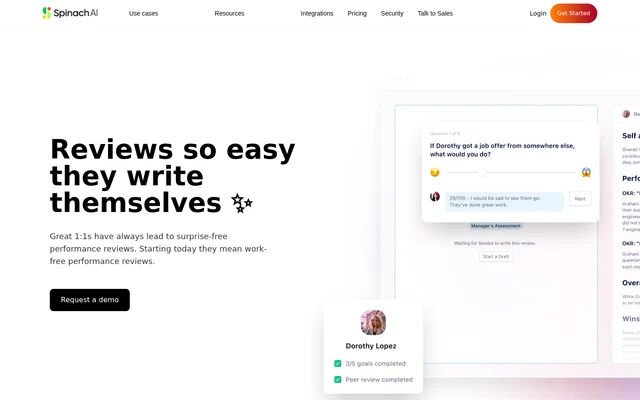
Hypercontext’s supplied performance review page uses the name Spinach in its feature descriptions and examples. The capabilities described include review drafting, talent analytics, automated review cycles and manager reporting. The page offers demo requests for further information rather than publishing plan details or a direct purchase workflow.
What Hypercontext can do
Hypercontext brings together performance information collected during meetings and uses assessment questions to guide AI-generated review drafts. Hypercontext also describes tools for organizing recurring reviews and examining performance data afterward. These capabilities connect the record of employee conversations with review documents, calibration views and reports intended for managers to act on.
- Hypercontext drafts performance reviews from notes, goals and assessments.
- Hypercontext uses assessment questions to guide the review draft.
- Hypercontext supports goal and OKR updates within meetings.
- Hypercontext creates review cycles around company operating cadence.
- Hypercontext turns calibration questions into performance comparison views.
- Hypercontext integrates with existing HRIS and directory systems.
- Hypercontext provides reports on goals, OKRs and management metrics.
How Hypercontext works
Hypercontext starts with regular one-on-one meetings that build a history of feedback, improvements and accomplishments. Goal updates add a record of progress, while assessment questions provide instructions for interpreting that information. The illustrated drafting process evaluates assessment questions, computes goal progression, analyzes meeting notes and parses a review template before producing a draft for a manager to edit.
Who Hypercontext is for
Hypercontext is aimed at managers and teams that want performance reviews to reflect ongoing conversations rather than an isolated assessment. The page also addresses businesses that need recurring review cycles, performance calibration and connections to existing employee systems. Manager reporting is presented as a way to examine goals, management metrics and time spent, then act on the resulting information.
- Managers can use Hypercontext to draft reviews from documented feedback.
- Teams can use Hypercontext to maintain a history of goals and accomplishments.
- Businesses can use Hypercontext to organize recurring review cycles.
- Managers can use Hypercontext calibration views to examine performance and promotion readiness.
Hypercontext pricing and demo access
Hypercontext offers a demo request as the stated route for learning more about the performance review workflow. The page repeatedly invites visitors to book or schedule a demo with an expert. No subscription prices, named plans, free tier or trial terms are published in the supplied text, so the page does not establish the cost of access.
Hypercontext strengths and limitations
Hypercontext combines review drafting with the meeting history and goal progress that inform the assessment. This workflow gives managers a draft to edit and connects review administration with reporting and calibration. The stated integration scope includes HRIS and directory systems, but the page does not name compatible providers or explain technical setup requirements.
- Hypercontext relies on meeting notes, goals and assessments as review inputs.
- Hypercontext does not identify supported HRIS or directory providers on this page.
- Hypercontext does not publish pricing or plan terms on this page.
Hypercontext FAQ
What is Hypercontext?
Hypercontext is an AI-assisted performance review tool that drafts reviews from meeting notes, goals and assessments. Hypercontext also describes automated review cycles, talent analytics, manager reports and connections to existing HRIS and directory systems.
How does Hypercontext write performance reviews?
Hypercontext uses accumulated one-on-one notes, goal progress and assessments to produce performance review drafts. Assessment questions guide how the AI interprets the information, and the illustrated workflow includes review template parsing. Managers then edit the draft instead of starting from a blank document.
Who is Hypercontext for?
Hypercontext is for managers and teams that document employee feedback, goals and accomplishments through ongoing conversations. Hypercontext also supports businesses that need recurring review cycles, calibration views and manager reports covering goals, OKRs and management metrics.
Does Hypercontext integrate with HR systems?
Hypercontext describes direct integrations with existing HRIS and directory systems to help teams get started and keep information accurate as the business changes. The supplied page does not name specific supported providers or explain integration setup.
How much does Hypercontext cost?
Hypercontext does not publish prices, plan names or free access terms on the supplied performance review page. Hypercontext offers a demo with an expert as the stated next step for learning more about the product.
Can Hypercontext automate performance review cycles?
Hypercontext automatically creates performance review cycles based on a company’s operating cadence. Hypercontext presents this capability alongside review drafting, talent analytics and manager reporting, connecting recurring review administration with the performance information collected during ongoing meetings.
From the community
No reviews yet
Be the first to review this tool. What you write helps the next person choose.